Raveesh Bhalla

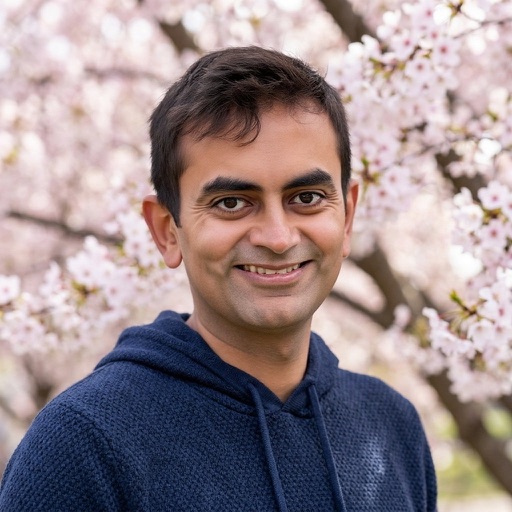
Hi, I’m Raveesh.

I’m Raveesh Bhalla, Founder and CEO of Orizu, a platform for continually learning AI applications.

Prior to Orizu, I worked on the algorithms that power Netflix’s homepage recommendations and built their AI search experience. I also built the AI systems that power LinkedIn’s jobs marketplace.

I’ve collected a few of my old blog posts here from my Medium, Substack, etc, and hope that I’ll be writing more frequently going forward. If something here sparks a thought, I’d be glad to hear it – my DMs are open on Twitter.

  1. No dead ends

    “No dead ends” is a commonly stated product/design “principle” for Search and Recommendation products.

    Read post →
  2. Writing with AI

    I’ve finally crossed a threshold where some parts of what I write - particularly memos at work - have some degree of content generated with AI.

    Read post →
  3. The NYT Test

    The past week hasn’t been a very good one for Google. The cultural issues, though, go well beyond Gemini.

    Read post →
  4. Copilots

    It's counter-intuitive, but for now it looks like _less_ automation is better than more automation. And we need dedicated copilots for each problem, with each copilot needing its own interaction paradigm that suits each individual's workflows.

    Read post →
  5. Building again

    Why I came back to writing on my own site—and how building with AI made shipping on the web feel fun again.

    Read post →
  6. Intimate computing

    I wrote the following post on my then Medium blog. Listening to Ben Thompson’s post on his conversation with Sydney (a persona of Bing’s GPT-based chatbot that some folks have managed to unlock) made me want to revisit it, and I thought it was worth sharing 9 years on.

    Read post →
  7. Chris Dixon on Web3.0

    Chris Dixon has a great thread on what Web 3.0 really is and why it matters. This is an area that I’ve been very intrigued by for the past couple of months, particularly since Loot launched (another post I highly recommend is this one about Loot).

    Highly recommend it, and I anticipate I’ll be sharing this forward quite often.

  8. Github.dev

    I’m so excited for this minor feature – I just wrote this post from my iPad browser in a couple of minutes, showing how quick and easy it now is to commit code and be productive from virtually anywhere, with any machine.

  9. Zero sum

    From Awareness: Conversations with the Masters by Anthony de Mello, SJ

    “Would you want me to love you at the cost of my happiness?” “Yes,” she answered. Isn’t that delightful? Wouldn’t that be wonderful? She would love me at the cost of her happiness and I would love her at the cost of my happiness, and so you’ve got two unhappy people, but long live love!”

    I was trying to think why this didn’t resonate with me. After a few minutes, I realized that it was because it positions the choice as zero sum, and I hate zero sum frameworks of decision making because it’s lazy and not representative of the real world.

    This applies to relationships, to personal wellbeing, to even capitalism (also why I detest companies that want to “crush the competition”).

    Read post →
  10. The pillars of AI product development

    1. Objective: seems obvious, but it’s vital to document your objectives clearly so you can ensure everything you do afterwards is set up to drive towards this. Your objectives are going to be iterated on over time – as they should be – as you get more and more granular about the outcomes you want from your AI products.

    2. Tracking & labelling: the saying goes “your models are only as good as your data”, which is 💯. However, a vital subpoint here is that your data might be wasted if you lack a quality labelling strategy (i.e. what labels you use, how you collect them and ensuring they’re not adding noise to your system).

    3. Infrastructure: Investments here can help boost reliability, performance, efficiency and productivity. If your product is a vehicle, this is your engine.

    4. Monitoring: the fact that AI models are black boxes makes this space so vital – when things break, you may not even realize that it has. And the impact can be disastrous. Easily one of the most underinvested spaces.

    It’s on top of this that you layer on your feature engineering and models itself. Invest in all four pillars to have compounding returns.
    Read post →
  11. Travelling to Rome

    Two of my colleagues asked me for my recommendations about their travel to Rome, so I thought id write down some highlights from earlier in the year!

    Read post →